Panel at Los Angeles Times Festival of Books 2013

Posted in The Literateria, Upcoming Events with tags , , , on 03/27/2013 by Janet Fitch

As most of you know, the Los Angeles Times Festival of Books is one of my favorite events of the year. The Gods have seen fit to put me on a stellar panel this year– with Lauren Groff (Arcadia) and Ben Fountain (Billy Lynn’s Long Halftime Walk).  We’ll be on at 11 a.m. on Saturday, April 20, at Seeley Mudd Hall on the beautiful USC campus.

If you wonder whether or not the Book Festival is worth your time, you’ll find in “The Literateria” posts from last year’s LAT Book Festival. So if you want a real car wash for your head, where it comes out all sparkly and spruced up, spend a day or two listening to the best writers alive now.


Ikebana

Posted in The Word: Stories with tags , , , on 03/22/2013 by Janet Fitch

The Word: FLOWER

Susie sat on the floor to arrange the flowers. Her mother heard her better when she was low and in front. People always loomed so over her shrunken form.  Susie examined the materials that had composed a mixed bouquet from Gelson’s–various shades of orange.  She’d hoped her mother would like them. Her mother liked orange. When Susie was a child, the largest room of the house, the playroom, had been painted a violent tangerine.  The starburst saffron gerbera, she decided, would be the focus, and the tallest of the eucalyptus spikes would be the center.

Music filled the air, a Mozart string quintet, with two violas.  Her mother loved music, but had forgotten how to manage the radio.

The rose blended  with the spicy scent of carnations and the green of chrysanthemum, the resinous eucalyptus. “How are things going, Mom? Making friends?”   Susie always waited to arrange the flowers until she’d arrived in her mother’s room, so she’d have something to do with her hands while she tried to make conversation.

“Some and some,” her mother said.  “In any place, there’s all kinds.”

Her mother looked good, sitting in her peach wing chair from the old house.  Better than she had any right to. Her thick hair,  gone perfectly white, looked just as good as it had in its former state–expensively blonde  and carefully layered. She was nicely dressed in black and gray, modern. Susie had managed to leave the pastel track suit behind.

“Bill’s in Boston, for his son’s graduation,” Susie said from the floor, enunciating clearly. “Sean’s  getting his Masters, in education.”  Snipping the stems of the button chrysanthemums.

“He speaks very good Spanish,” her mother said.  ”He can talk to the people here, tell them what I want.”

“That’s Noah,” said Susie.  Her brother. “Bill’s my husband. Remember, he plays the guitar for you.”

“I know,” said her mother.

She measured the gerbera’s long stem against the vase, judging the best height for it, recalling the basics from her ikebana class with ancient Mrs. Morita at LACC. How she’d struggled with her pathetic two flowers and little branches of foliage. But she learned.  The idea was to create the shape of  a large dome using just a few sprigs of greenery, a couple of flowers, a branch.  Ikebana was about making the most impact with the least materials, a true arte povera.  Before taking the  class, she would never have thought to cut a large bloom short. Now she clipped the gerbera low, and let it come forward as the focus. “Pretty?” she asked.

But when she looked up, she saw that her mother’s gaze was trained on the swaying cypress across the street.

“I love that view,” Susie said. The light through the jacaranda, the breeze in its feathery fronds.

“Have you been here before?” her mother asked.

Susie held her breath,  felt the zing!  in her lungs.  She had built that chest of drawers herself, an assemble-at-your-own-risk kit from Crate and Barrel. The nightstand too.  She’d assembled each of the room’s four lamps—two hanging Craftsman fixtures on either side of the bed, a magnifying lamp and the corner’s torchiere.  She’d built the ikea worktable.. She’d selected every garment in the closet, put away every sweater and scarf, arranged tchotchkes and shelved the books, hung every painting.

She picked a sprig of carnation and snipped it, trying to keep her voice level. “Yes, I have.  Many times.”

The question was, why did she do this? Why keep visiting someone who had no idea who she was, and didn’t really care?

Her mother liked the new place all right, had made friends, knew where she liked to sit for meals—the round table by the window—Susie was happy for that.  But the flip side was—her mother’s  indifference. Her own mother treated her exactly as she would  a presentable stranger. Cordial but distant.

Why did she come at all?

The old woman gazed out the window at the afternoon sun filtering through the jacaranda, listening to Mozart. They had chosen this room because of the view, the trees, the hillside, the green wall and the Spanish apartment and even the traffic’s steady hum.  Now she was content.

It  beat the hell out of how she’d been–desperate, anxious, calling a million times a day,  Everything an emergency. It wasn’t long ago that Susie took off work to bring her mother to the doctor when she was panicking, my throat’s closing up! And when she got there, her mother told the doctor her foot hurt.

But now those calls had ceased, and in addition to the sheer giddy relief she had expected to feel, came a shock and a sadness she hadn’t anticipated. Although she didn’t miss the constant need, the complaining and demands, it had always been accompanied with love and tenderness. ‘I don’t know what I would do without you,’ her mother used to say. ‘You’ve really changed a lot.’ (From the sullen teenager she’d been, about forty years ago!)

But now that was over.   And this was what was left.

And she came because she wanted whatever was left, she would make do with that–the way you inhaled the last fragrance of a summer rose.

She picked up the arrangement in its vase, and positioned it on the side table. It was beautiful, airy and striking, a real painting. Her mother would enjoy it, even if she didn’t remember who had made it.

Well, she’d certainly got the most of that small bouquet. Filled space with the modest materials at hand. She kissed her mother goodbye,  hugged her, feeling the sharp fragile bones of her shoulders.  “I’ll come back on Sunday.”

She left the radio playing, they could turn it off when they took her mother to dinner.  The old lady sat with her eyes on the trees, listening.  At least she had not forgotten Mozart.

Part  of a semi-weekly series of short short stories based on a writing exercise, The Word.  “Inspired by a simple word, chosen at random, write a two-page double-spaced story, using the Word at least once.”

 Next week’s word: BITE


Short takes from Los Angeles Review of Books

Posted in The Literateria with tags , , , , on 02/01/2013 by Janet Fitch

Hi All–this morning I stumbled upon this cache of little videos from conversations I did last year with the Los Angeles Review of Books!  Opinionated as always…

My take on the Future of the Novel.

My view on hierarchies of veracity in non-fiction.

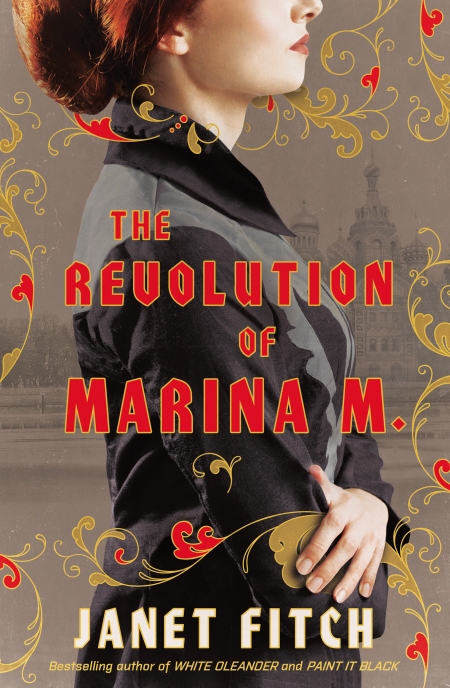
Thoughts about my new novel, Marina Makarova.

And while you’re there, look around at some of the other wonderful interviews they’ve done, with writers like Aimee Bender, Michael Tolkin, Paul Mandelbaum, Laila Lalami, Mark Haskell Smith, Jerry Stahl.

Crickets

Posted in The Word: Stories with tags , , , on 01/30/2013 by Janet Fitch

The Word–FOLD

Annie and Cliff strolled around the reservoir as they did most evenings, when the sun tinted the landscape into Maxfield Parrish golds and pinks and blues, watching herons fly crookednecked to their nests up in the massive eucalyptuses. They didn’t saying much, just held hands, heading for their usual ending spot–the long oak bar of the Firehouse.

Cliff’s hand felt good in hers.  Solid, capable, warm. He’d been there through all of it—the professional struggles, mumps and measles, cooperative nursery school, the cancer scare. All those trips, the college applications. Now Nora was out in the world, and Cliff was thinking of retiring from the firm.  He played scenarios back and forth, what if he did, what if he didn’t. Annie, a painter, had no idea.  Painters didn’t retire—they just painted bigger, or switched media– turned to lithography, or woodcuts.  Or even started writing. These were the best years, Nora in college, then law school, now she was working in DC, good and launched. Annie’s empty nest syndrome had lasted all of a week and a half. Working, no meals to cook, no particular time to get up or go to bed, no one to worry about but the two of them.

Then, her mother began to fail. “She’s sure they’re bugging her room, writing down everything she says. She went on and on about it.” Annie stepped aside for a young runner with three dogs of wildly varying size trailing him on leashes, tongues hanging out.  “I finally lost it and started screaming at her– Why would anybody be interested in what you say? Are you working for the CIA? Are you on the House Armed Services Committee? Turns out she thinks its me, they funnel it all directly to me. Like I’m dying to know what she does every moment.”

Cliff just kept walking, he didn’t get involved, knew she just needed to complain, like a deeper form of breathing, with him she could exhale, finally. She and her mother had never gotten along, but Annie was an only child, so there was no choice, there was no one else.  She often felt like a diver who gotten tangled in the kelp, she was beginning to panic, she had to find her knife, and cut herself free.  “Let’s run away,” she said.

“Let’s go to England,” Cliff said. “Some little spot without phone service. A country pub that smells like people’s wet dogs, with plaid carpet and old men playing darts.”

She took his arm.  “It’s horrible to see her, folding up like a piece of paper. You can watch it happening. And somehow I feel like it’s me, that I’m doing it somehow, sucking the life out of her.  Like I’ve defeated her in some way.” Annie always remembered the myth about the man who asked for eternal life, but forgot to ask for eternal youth.  He turned into a cricket.  Soon she’d be able to put her mother in her pocket.

“You didn’t do it,” Cliff said.  “You just came on the conveyor belt later. It’s the  way it’s set up.”

She exhaled, and grabbed the chain link, gazed out at the row of seagulls which had settled on a line of buoys.  “It doesn’t feel good. I wear the things she gives me, but it feels wrong.  I wore her gold watch today, thinking she’d like to see me in it—but I’d felt like I’d stolen it.”

He rested his arm lightly on her shoulder, pressed his cheek to her hair. “She knows you didn’t steal it.”

“No, but I feel it. Existentially.”

Cliff’s parents had died years ago, his mother of cancer at 45, his father of emphysema– years ago.  Her own father’d had a heart attack in the parking lot at his bank.  Neither of them had ever deal with this, the awful and indisputable reality of advanced old age.

And now they were headed that way themselves. Almost sixty.  The end of middle age. Though Annie’s friends were always saying sixty was the new forty, that was just whistling in the dark. She had taken to examining people in movie theaters and malls and restaurants, the people on this very path, and it was very clear, she was older than most people in the world now.  Older than the newcasters, and the actors on TV, the guys from AT&T. The waiters and bartenders and the President of the United States. She was not middle aged.

Yes, she could still do a three mile walk, including hills, but she looked different than she did at 50. Her hair was gray. She wore glasses all the time, it wasn’t even worth the trouble of taking them off. She wore hats. She avoided heels. She woke at four in the morning more nights than not.  Her body had developed afflictions she’d even had time to get used to—her hands, left hip, the top of the left foot. She’d lost a tooth.  Really, she had more in common with the geezers in the dining hall at Toby’s than with this couple pushing their big-wheeled stroller around the gold-kissed blue of the reservoir this evening.  It was just so sad.

“When we’re that age, let’s smoke pot every day,” she said. “And listen to Led Zep at full volume, and live in a yurt.”

“Sure,” Cliff said, putting his arm around her waist. She was trembling, though the evening was soft and warm. “I’ll be the sane one, and you’ll be mobile, and you’ll push my chair and I’ll tell you who everybody is.”

“And we’ll smoke spliffs big as baseball bats, and sit outside and look at all the birds.”

“In England. With a wet dog.”

The gold of the day had faded to indigo by the time they reached the Firehouse. They settled onto their barstools, hooked their feet over the rail, and whether or not they were the oldest people in the place, their martinis were good and strong– his with olives, hers with a twist– and they toasted the wet dog they would own, and the crickets they would–with luck–become, and hide in each other’s pockets.

One of a series of short short stories based on a writing exercise, The Word.  “Inspired by a simple word, chosen at random, write a two-page double-spaced story, using the Word at least once.”

 Next week’s word is: FLOWER


School Night at the Viper Room

Posted in The Word: Stories with tags , , , , , on 12/30/2012 by Janet Fitch

The Word–BAND

Michelle ordered a Jack Daniels. It was a Thursday night at the Viper Room, the bartender a girl with extraordinary tattoos and a blue streak in her black hair.  Michelle felt ridiculous in her jeans and high heeled boots, false eyelashes glued to the outside corners of her eyes, a trick she’d seen in Allure but hadn’t possessed the nerve to try before this. She would have ordered red wine, but it seemed too old-lady. Jack Daniels was the thing to drink in a dark nighclub on the Strip.

She perched on the barstool, pretending to be interested in the first band–mediocre, with a screamer, not one word intelligible–pretending everything was cool. She tried not to make eye contact with anyone. She had never, ever been to a bar by herself, not in her forty years on this planet.

She would normally be getting ready for bed at this hour.  But she had promised Dustin she would come.

Dustin Jakes. A tall, lanky boy with tribal tattoos and dreadlocks she’d found on a flyer:

                                    Guitar Lessons With Dustin,

                                          from the band The YoYos

                                                I will teach you the

                                          Secrets of the Universe

                 Electric, acoustic, 12 string, also mandolin U name It!!

                                     CHEEP AT TWICE THE PRICE!!

He was, in fact, $25 an hour.  Not exactly CHEEP but within the realm of the possible. Her ex refused any part in the project–it was Michelle who bought Chloe the guitar–slightly used, off Craigslist–and Michelle who paid for the lessons. She didn’t make much money as a history teacher at John Burroughs Junior High, but she was good at saving money, stashing a little here, a little there, ready to splurge on something really important, like a pearly black Stratocaster and a little Fender amp for her daughter’s thirteenth birthday.  And Dustin Jakes, to teach her the Secrets of the Universe.

She was paying him when he invited her to come see his band. At the Viper Room.

Instantly, images arose of a talented young star dying on the sidewalk as soulless young people stood around him in a modern day version of Day of the Locust.  “Thanks,” she said.  “But I don’t think I can. School night.”  But it sounded lame, even to her. Like she was 12.  What was she afraid of?  The Viper Room?  Or Dustin, his gold-dusted dreads, his mocha skin, his clear green eyes. He’d already asked her out once for a beer, she’d been both charmed and terrified.

“We’re the second band. Nine-thirty, ten o clock max.  Come on, you’ve never seen what I can do.”  He gazed at her reproachfully.

“Oh, maybe,” she said.  thinking, not in this life.  What would she wear, for god’s sake? Squeeze her fat ass into a pair of jeans and high heels like an idiot?  She was too old for the Viper Room.  She was too old for Dustin by about 20 years.  But even as she was saying no way she was thinking, who she could get to go with her?  Mary? Helen? She should see him play. Or whatever else it was he was asking.

“I’ll put you on the list, you’ll just pay to park.” Smiling his goofy-ass smile. Chloe in the other room, practicing a Jack White riff.  That child hadn’t been as excited about anything since the divorce.

And so, Michelle found herself walking up to the Viper Room box office and giving her name, and there it was, on The YoYos’ list. And now she was propping up the bar, terrified to look to the left or to the right. The place was half full, boys and girls, more boys than girls, and God, they were all so young.  She did not belong here.  Where did they all get the money to come to the Viper Room on a Thursday night?

She never felt so old, so out of place.  Would the band never come on?

Three loud boys stood at the bar next to her, looking at their cell phones and laughing about some text message.  She felt invisible. She felt like a junior high wallflower all over again–ignored, ridiculous, hopeful, despairing. Finally an older group came in–two whippet-thin men with gray hair, and women with those expensive choppy haircuts, who sat  in a reserved booth in the corner. They looked like people from the music business.  Maybe she could pretend that’s what she was.  I’m from the record company.  The ‘label,’ isn’t that what they said?  Or an agent.  Or a backup singer from the House of Blues up the street, dropping by to see what was new.  A ‘friend of the band.’  Something that would make it cool to be old, or at least plausible.  Actually, I own this joint.

At last, The YoYos came on.  A fat drummer with a goatee, skinny-ass bass player with a cap,  intense, intellectual keyboardist in hornrimmed glasses, and Dustin, astonishingly handsome in a Bob Marley t-shirt, dreads bright in the darkness. They had a psychedelic sound–the keyboardist sang, a reedy voice, and Dustin was indeed a remarkable guitarist, he played with a warm, honeyish, Hendrixy tone that was thrilling, almost like a human voice, and Michelle could feel that voice inside her, warming her.  She had not dated since she and Jeremy divorced. and could not silence the fantasies of Dustin.  She had had them since Chloe started taking lessons. That smooth skin, the goofy macramé necklace with the simple beads woven in, his sensitivity, he picked up on her vibe, she knew it, but not in an awful way.  Just–he knew.

Oh, he’d seen her! She waved, a small wave, and he smiled, dipped his guitar.  And what if… What if she just gave in? Wasn’t that really why she was here? In adult’s-only territory, minus the 13 year old chaperone? She gazed at Dustin in his luminous pool of spotlight, the liquid tone of his guitarwork.   For once, she would not chicken out.  She would not let tonight slip away without seeing what this was.  She would be insane not to find out.  She had not slept with anybody in a year, a whole year…. she had worn her red lace underwear, just in case.  And had slipped a condom into her wallet–though boys knew what to do now, it was de rigeur. She wondered what his place was like. She hoped it wasn’t full of dirty clothes and pizza boxes, moldy.  But she was sure he would make her feel just like that sound, honey and warm and thrilling.

Finally, the YoYo set was over.  She waited anxiously. Was he ever going to come out?  Oh, yes, here he was! Golden, still looking like there was a spotlight on him.  Pushing through the crowd which had thickened during the set.  He saw her at the bar and swam over to her. “Michelle! You came!”  He hugged her, and kissed her on the cheek.  His shirt was soaked with sweat.  “Thanks for coming, it means a lot. Did you like it?”

“Amazing. So glad I finally heard the whole band..”  He kept his arm around her shoulder. She assumed he was going to join her for a drink, but a pretty girl in a baby-doll vintage dress and striped tights squeezed in, and he seemed equally delighted to see her, and the other people he knew. He was just delighted to see everybody, like a big Golden Retriever puppy.  Just a world of delight, embracing them all, wrapping them in his glow, and letting his friends lead him away. “Thanks for coming!” he shouted back over his shoulder. “See you Tuesday!”

And she realized that was all there was.  All there’d be. She had seen him play.  That was all he’d wanted. Just for her to come and see the show, after paying him all these weeks. To see what he could do. He hadn’t promised anything, she’d just read him wrong.  She was stunned, that she could be so stupid, such a silly, ridiculous middle-aged sentimentalist, she should have stayed home and read a Harlequin Romance. To think that a boy like that would be interested in her– a pupil’s mom, who sometimes let him stay to dinner when the lesson ran late. She wanted to drop into the floor. She wanted to disappear in a flash of sulphurous smoke.  She grabbed her purse, dug around for a Kleenex but of course there was never one when you needed it.

The bartender slapped another Jack Daniels on the bar.

“I didn’t order this,” Michelle said.

The tattooed girl nodded down the bar to a man with a little beard, glasses, a leather jacket. Pleasant looking, rosy cheeked. He held up his bottle of beer. Cheers.

She’d seen this in movies, but it had never happened to her before. Well, she would drink it. She was forty, not twenty two.  She toasted him back, drank. Let it  loosen the tightness around her ribcage, the grip of shame upon her throat.  What was she out? The price of a drink, $10 parking.  What was self respect, anyway?

“So, you’re friends with YoYo guitar player.” The little man with the beard had edged down the bar, and  now stood next to her.

“My daughter’s guitar teacher,” she said matter of factly. Not even trying to look like a backup singer or a music industry professional.

He tipped back his Newcastle Brown.  “How old’s your daughter?”

“Thirteen,” she said.

“Any good?”"

“Yeah, she’s good.”  She sipped her fresh Jack Daniels. “You know, I’ve never been here before.  Driven by a million times. It used to be owned by Bugsy Siegel in the Forties.”

He grinned. His teeth were small, with an appealing gap between the front two. “Well you better watch out, you might end up with a musician, and then you’ll be here three times a week.  At least she’s a guitar player. My son’s a drummer.”  His glance went to the drum kit being set up on stage.  “If he’d played the harmonica, I could have gotten a sports car.  He’s in the next band, The Free Thinkers. You staying?”

It was midnight.  If she left now, she could be home by 12:30, and tucked up in bed ten minutes later. Across the room, Dustin stood with his lanky arm wrapped around the girl in the striped tights.  She couldn’t leave now. It would feel like slinking out with her crushed little party favor of a heart stuffed in her handbag.

“Sure, why not.  It’s almost the weekend.”

The Free Thinkers were better than the YoYos, the songs less cliche, the singer’s voice was strong and clear, and the man’s kid, the drummer, was insanely good.  She leaned back against the bar and thought, she hadn’t really needed Dustin after all. She’d  just needed something.

Maybe this was one of the Secrets of the Universe.

Cheep at twice the price.

Part  of a semi-weekly series of short short stories based on a writing exercise, The Word.  “Inspired by a simple word, chosen at random, write a two-page double-spaced story, using the Word at least once.”

 Next week’s word is: FOLD

The Day the World Ended

Posted in Poems with tags , , on 12/22/2012 by Janet Fitch

The Day the World Ended

The day the world ended

Looked like any other day

But everything was changed,

My tangled hair

my rumpled bed,

I arose

And everything was new.

The little cat who prowled the yard

Sniffed every new-created flower

Under a fresh-imagined sky.

The soil, still wet

From old world rain,

Had transformed,

Every atom had reset its clock.


Of course the usual reactionaries

Had hoped for volcanoes and tidal waves.

Any apocalypse would do,

So long as it killed off the all the godless

Liberals

Turned them to tiki torches

Roasted them on a spit

Or drowned them in a thousand feet

Of rushy sea.

Their final dream –pornography.


Yet it came nonetheless.

Invisible but complete.

I am changed

The cat is changed

Even the street is new.

Who might I be this time?

Lover, poet, dreamer.

Goodtime girl at the end of the bar.

Or finally, genius?


Grace rushes in

Like a thousand feet of water,

and beauty, doing cartwheels.

What should one do when the world ends?

Notice.

The Secret Agent

Posted in The Word: Stories with tags , , , , , , , on 12/16/2012 by Janet Fitch

The Word–SOCK

When Mom’s at work, Scott does what he wants.  It’s just him and me, and he’s three years older.  One of the things he likes to do is sock me in the shoulder.  He socks me in the shoulder in the same place, day after day. He doesn’t have to really hit me hard anymore, it always hurts from being hit all the time. I tell Mom, I call her at work and tell her Scott’s beating me up, but all  she says is, “Oh, he wouldn’t do a thing like that.”

I hate her and I hate Scott, I even hate my dad who can be in the same room when Scott’s socking me, and Mom screams at me for yelling.  He just sits there in his ugly lounge chair watching The Game on TV.  I hate sports.  I hate Dad and Mom and Scott and sports and TV.  I hate anyone who can just sit there when someone’s getting beat up and watch TV like nothing’s happening.  I especially hate anyone who leaves a kid alone with her maniac brother and can actually, really say, when you call her crying,  ”Oh, he wouldn’t do that.”

Like I’m crazy, like I’m making the whole thing up.

I hate my teachers, like Miss Dickson the math teacher, who makes me cry in class every day. I’m always freaked out at school. I just cannot remember how many feet in a fathom. How many sheets in a ream of paper? How many feet in a furlong?  How many pecks in a bushel?  She asks so fast, picking people at random so you can’t be prepared and WHAT THE FUCK DO I CARE? Life is hell and I hate Miss Dickson. She makes me cry, and then the other kids laugh and imitate me, sobbing.

I hate the other kids, Marlene and Jennifer and Cassie, who make fun of me,  they do mean stuff like bashing the bottom of my bag of popcorn so it flies up into my face. I even hate Gigi, who is my best friend but likes Marlene better, so if Marlene’s around, Gigi is mean to me too.

Sometimes I just cry for no reason at all.

I’m only in the seventh grade. I have five more years before this is over. I don’t think I’m going to make it.

Sometimes I imagine I’m a secret agent, a spy on a mission from an alien planet, and I have a spy camera in my head, and I’m sending all this information back to my alien leader.  This is what life on earth is really like.   Then I don’t mind it all as much.  I think, okay, bring it on, because someone is watching this.  Like the cops on Cops.  They aliens are stunned. They cannot believe what a jerk Miss Dickson is. Their hearts hurt when they see me run out of class crying.  They wince when Scott hits me in the shoulder one more time.  They’re outraged when Mom gets mad at me for calling her at work, for making up shit about my brother.  They can’t believe what a shitty deal life here is like.

I’m not really me.  I’m just here on assignment. Recording all this.  It’s not really me.

Except when Scott socks me in the shoulder again.  Then it’s really, really hard to remember.

Part  of a semi-weekly series of short short stories based on a writing exercise, The Word.  “Inspired by a simple word, chosen at random, write a two-page double-spaced story, using the Word at least once.”

Next week’s word is: BAND

Follow

Get every new post delivered to your Inbox.

Join 430 other followers